











Miami-Dade County offers dramatically different ways to live within a relatively small area. A Brickell high-rise, a Miami Beach waterfront residence, and a home in Coral Gables or Pinecrest can each suit a different routine, budget, and long-term plan. Buyers comparing these choices can benefit from local perspective, particularly when weighing building services against property-level responsibilities.
Miami Beach real estate experts Boschetti Realty Group serve clients across Miami Beach, Coconut Grove, Coral Gables, Pinecrest, South Miami, and other South Florida communities. Boschetti Realty Group is a luxury-focused real estate team with experience in waterfront estates, penthouses, high-end homes, and investment opportunities, making its local neighborhood knowledge useful when comparing the practical differences between Miami property types.
Why Property Type Matters in Miami
Miami buyers are not just selecting bedrooms, finishes, or a ZIP code. They are choosing an ownership model. A frequent traveler may prefer a lock-and-leave condo with staffed entry and managed common areas. A household that wants room for children, pets, hobbies, or visiting relatives may prioritize a yard, storage, and private living space. A buyer focused on boating may value direct water access over proximity to restaurants or a short commute.
That distinction matters because a lower list price does not automatically mean lower carrying costs. Association dues, insurance, property taxes, exterior repairs, landscaping, reserve funds, and storm preparation can affect the realistic monthly and annual budget.
Compare the Full Cost, Not Just the List Price
Before scheduling tours, establish a full ownership budget. Ask a lender, insurance professional, and real estate adviser to help estimate expenses for each specific property rather than relying on broad averages.
Costs to Put in Every Comparison
- Down payment, mortgage payment, closing costs, and property taxes.
- Homeowners insurance, wind coverage, and flood insurance where applicable.
- Condominium association dues, building fees, and the possibility of special assessments.
- Roof, HVAC, plumbing, pool, landscaping, pest control, security, and exterior upkeep.
- Planned renovations, furnishings, and an emergency reserve for unexpected repairs.
For a condo, the question is not only how much the monthly dues cost. Buyers should understand what services are included, how the association is funded, and whether anticipated repairs could affect future expenses. For a detached house, the owner has greater control, but also assumes direct responsibility for maintenance decisions and timing.
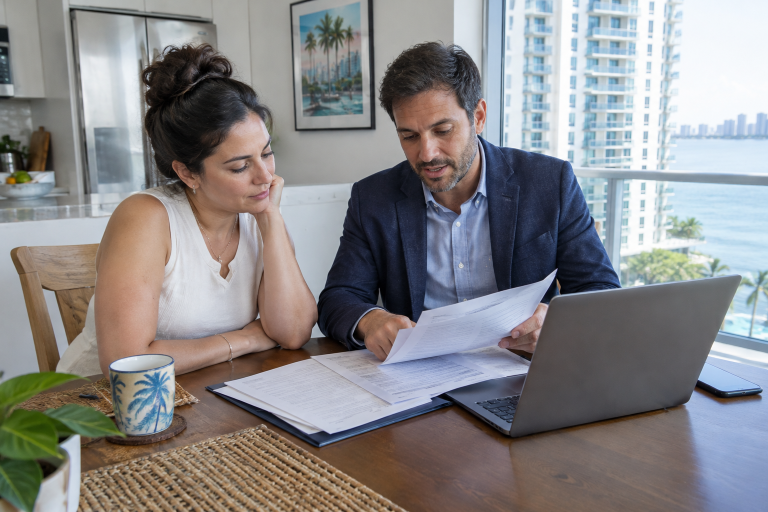
When a Condo May Be the Better Fit
A condo can be a strong option for buyers who value location, convenience, and access to shared amenities. Buildings in areas such as Brickell, Downtown, Edgewater, and Miami Beach may appeal to people who want nearby dining, cultural venues, waterfront paths, or shorter trips to work and entertainment.
Questions to Ask About Any Condo Building
- What do the association dues cover, and what is excluded?
- Are there current, pending, or recently completed special assessments?
- What do the association’s budget, reserves, meeting minutes, and financial records show?
- Are there restrictions on rentals, pets, renovations, guests, or parking?
- What inspections, repairs, or insurance changes has the building addressed recently?
A well-run building can simplify ownership, but no buyer should treat shared management as a substitute for reviewing documents. The condition of the building, its financial planning, and its rules can shape both the ownership experience and eventual resale appeal.
What to Check Before Buying Waterfront Property
Waterfront homes in Miami Beach, Coconut Grove, Key Biscayne, and nearby communities can offer exceptional views and outdoor living. Yet two homes described as waterfront may have very different water access, exposure, maintenance needs, and improvement histories.
Waterfront Due Diligence Checklist
- Confirm the property’s flood zone, elevation information, drainage conditions, and any known flooding history.
- Inspect the seawall and review its age, condition, permits, repair history, and responsibility for future work.
- Verify permits for docks, lifts, additions, pools, generators, and shoreline improvements.
- Check water depth and bridge clearance if boating is part of the plan.
- Request written insurance estimates early in the inspection period.
Flooding, sea-level rise, and severe weather are part of South Florida’s long-range planning conversation, and local resilience projects continue to influence infrastructure decisions. Reporting on Florida’s efforts to adapt to rising water and stronger storms illustrates why resilience belongs in a buyer’s property review, especially near the coast.
Why Some Buyers Prefer Suburban Homes
Suburban neighborhoods such as Coral Gables, Pinecrest, South Miami, and parts of Miami offer a different value proposition. Buyers may find more indoor and outdoor space, greater privacy, room for a home office, and more freedom to personalize landscaping or major systems.
The tradeoff is that ownership becomes more hands-on. The homeowner manages roof maintenance, exterior painting, landscape care, irrigation, security, and storm preparation. Travel times may also be longer depending on the household’s regular destinations. For many buyers, however, that responsibility is worthwhile because control, yard space, and flexibility are the priorities.
Review Insurance, Flood Risk, and Resilience
Resilience does not mean avoiding every coastal or older property. It means understanding the home’s design, records, maintenance needs, and risk profile before making a commitment. Buyers can begin by reviewing FEMA-maintained flood maps, then pair that research with property-specific insurance quotes and professional inspections.
Documents and Estimates to Request
- Current homeowners, condominium, wind, and flood insurance estimates.
- Roof inspection records and wind-mitigation reports.
- Elevation certificates when available.
- Condo reserve studies, inspection reports, and board meeting minutes.
- Permit records for major renovations and waterfront structures.
A Simple Miami Buyer Due Diligence Checklist
- Set the real budget. Include taxes, insurance, dues, maintenance, and reserves.
- Choose the lifestyle first. Rank walkability, space, water access, privacy, and low maintenance.
- Visit at different times. Check traffic, noise, parking, sunlight, and neighborhood activity.
- Get insurance figures early. Do not wait until the final days of the transaction.
- Use the right inspectors. Waterfront homes and older buildings may need specialized expertise.
- Consider future flexibility. Ask whether the home would still work if family, work, travel, or rental plans change.
Final Decision Guide
Choose a condo when convenience, amenities, location, and reduced exterior maintenance lead the decision. Choose a waterfront home when views, outdoor living, and water access justify deeper due diligence and potentially higher ownership responsibilities. Choose a suburban home when space, privacy, control, and long-term flexibility matter most. The strongest Miami purchase is the one that fits both the buyer’s everyday life and the full cost of owning it.