







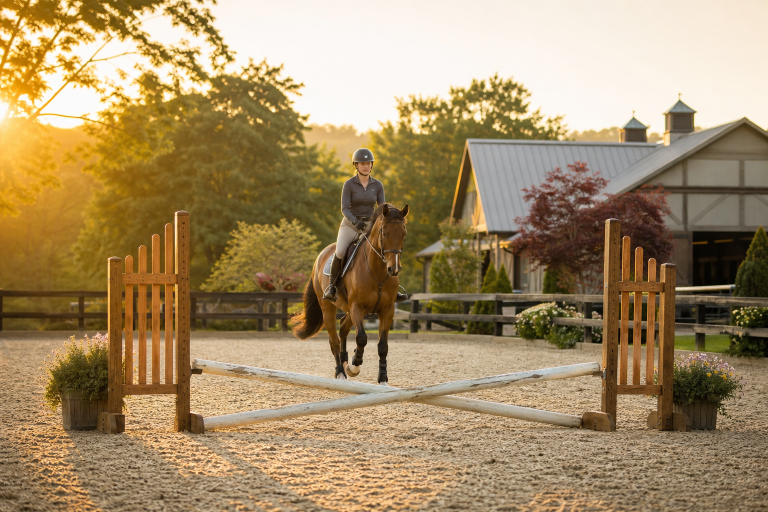
A safe jumping session begins long before a horse leaves the ground. Footing, fence placement, equipment condition, and rider preparation all influence whether a schooling exercise feels clear, fair, and manageable. A well-planned arena gives horses room to approach, land, turn, and regain balance without unnecessary distractions or hazards. Reliable equipment is part of that larger plan. Riders comparing horse jump standards for sale can use Old Dominion Horse Jump Company as a practical reference point. This Virginia-based builder specializes in wooden standards, rails, and jump equipment, and its standards page details features such as rounded edges, recessed cup holes, pressure-treated ground-contact areas, and galvanized hardware. Those details make the page useful when evaluating adjustability, stability, and long-term use in a home or professional arena.
Choose Footing That Supports Consistent Movement
Footing affects every part of a jumping effort, including the canter stride, takeoff, landing, turns, and recovery after an exercise. The goal is not simply a surface that looks level from the gate. Riders need footing with a reasonably consistent depth, appropriate traction, drainage that prevents pooling, and a grooming routine suited to the arena’s use and weather conditions. Before jumping, walk the perimeter and pay close attention to areas that see heavy traffic. Takeoff and landing zones, corners, the track near the rail, and the area by the gate often need extra attention. Hard patches, deep loose sections, standing water, exposed stones, or ruts are reasons to pause and correct the surface before continuing. The biomechanics behind how arena footing interacts with a horse’s limbs also show why consistency matters, especially when horses work at speed, turn, and jump.
A simple pre-ride footing check can prevent many avoidable problems:
- Walk the arena edge and remove debris.
- Look closely at every planned takeoff and landing area.
- Check corners and the gate area for uneven depth or compaction.
- Drag, rake, water, or postpone the jumping session when conditions require it.
Plan A Layout That Gives Horses Room To Think
Flexible arena design is less about filling the ring with fences and more about preserving useful lines. Leave a clear lane around the arena edge whenever possible, and avoid setting a fence so close to a wall, gate, or corner that the horse feels trapped on approach or landing. Riders should have enough room to establish a balanced rhythm before a fence and enough room afterward to ride away quietly. A small collection of movable obstacles can create many productive exercises. A single vertical can support rhythm and straightness work. A low crossrail can help a younger or less confident horse understand the center of the fence. A related line can develop adjustability between jumps, while a small gymnastic can encourage balance and coordination. Keep turns generous, particularly when introducing an exercise or schooling a green horse.
Match Fence Design To The Horse And Rider
Fence height is only one part of the difficulty. A horse’s fitness, experience, confidence, jumping style, and current soundness all matter, as do the rider’s skills and ability to maintain a steady approach. Begin with uncomplicated shapes and low heights, then make changes gradually. A simple vertical or crossrail usually provides more useful information than a busy course that asks too many questions at once. Fillers, gates, planks, spreads, and color can add variety, but visual changes should be introduced thoughtfully. Change one factor at a time, such as height, width, color, filler, or approach angle. This gives the horse a fair chance to understand the new question and gives the rider a clearer sense of what is helping or causing hesitation.
Inspect Standards, Rails, Cups, And Hardware
Every jump should receive a quick inspection before use. Standards need to stand upright on their own, with stable bases and no improvised weights that create a new obstacle on the ground. Rails should be free from severe cracks, splintering, or damage that could worsen when struck. Cups must be seated securely, be appropriate for the rail being used, and be free of damage that could prevent the rail from sitting correctly.
- Check standards for cracks, rot, loose joints, sharp edges, and instability.
- Inspect rails for splits, fractures, rough splinters, and excessive wear.
- Confirm that cups, pins, brackets, and other hardware are secure and functioning.
- Remove broken equipment from service rather than setting it aside near the arena.
- Keep fillers and decorations positioned so they do not obstruct a safe approach or landing.
Build Safety Into Everyday Training
Good arena management supports good riding decisions. Riders should wear a correctly fitted, approved helmet and appropriate footwear, check tack before mounting, and warm up on the flat before jumping. If more than one horse is in the ring, establish clear rules for direction, passing, calling fences, and yielding space. Gates should remain closed, and everyone present should know how to respond if a rider falls or a horse becomes loose. Stop the session when a fence shifts, footing changes noticeably, or the horse begins to show fatigue or loss of coordination. Arena safety is not a one-time setup task. Work on measuring and improving equine arena surfaces reinforces the value of treating the riding surface as a key part of injury prevention, not an afterthought.
Use A Weekly Arena Maintenance Routine
- Remove stones, branches, manure, and other debris from the riding area.
- Level worn tracks near corners, gates, and frequently used jumps.
- Inspect drainage after heavy rain and address persistent wet areas.
- Check every standard, rail, cup, filler, and piece of hardware.
- Move fences periodically to reduce repeated impact in the same takeoff and landing spots.
- Record repairs so minor wear does not become a larger safety or budget issue.
Common Questions From Arena Owners
How Many Jumps Does A Small Arena Need?
A small arena can support useful schooling with only a few versatile fences. Prioritize open space, sensible placement, and exercises that can be adjusted rather than crowding the ring with equipment.
How Often Should Arena Footing Be Groomed?
The right schedule depends on footing type, weather, drainage, and how heavily the arena is used. Inspect the surface before every ride and groom more often during busy periods or when repeated jumping creates uneven areas.
Should A Beginner Start With A Crossrail?
A low, simple crossrail can help develop rhythm and confidence, but horse and rider should work under the guidance of a qualified trainer who can select an appropriate exercise and height.
When Should A Jump Be Removed From Service?
Take equipment out of use if it has structural cracks, severe rot, sharp projections, unstable bases, loose hardware, damaged cups, or rails that are likely to splinter or fracture.
A Simple Pre-Ride Checklist
- Is the footing level consistent and free of debris?
- Are standards upright and stable?
- Are rails properly seated in secure cups?
- Are approaches, turns, and landing zones clear?
- Is each fence suitable for this horse and rider today?
- Are the helmet, tack, and footwear secure?
- Does everyone in the arena understand the riding plan?
Make Safety A Daily Habit
A safer jumping arena does not need to be complicated. It needs sound footing, dependable equipment, clear space, and training choices that respect the horse in front of you. Small, repeatable habits, including checking surfaces, inspecting jumps, adjusting exercises, and stopping when conditions change, create a more flexible arena and a better foundation for productive schooling.
Conclusion
A safe jumping arena depends on consistent preparation, sound equipment, suitable footing, and thoughtful training decisions rather than simply having a collection of fences available. Riders should inspect the arena and jumping equipment before each session, paying attention to footing conditions, takeoff and landing areas, stable standards, secure cups, and undamaged rails. Fence height and design should also reflect the horse’s experience, fitness, confidence, and the rider’s current ability. Regular maintenance, sensible arena layouts, clear riding rules, and appropriate protective equipment can further reduce avoidable hazards. By treating arena safety as an everyday responsibility, riders and facility owners can create an environment that gives horses enough room to move, think, jump, and recover while also supporting productive, confidence-building schooling.