






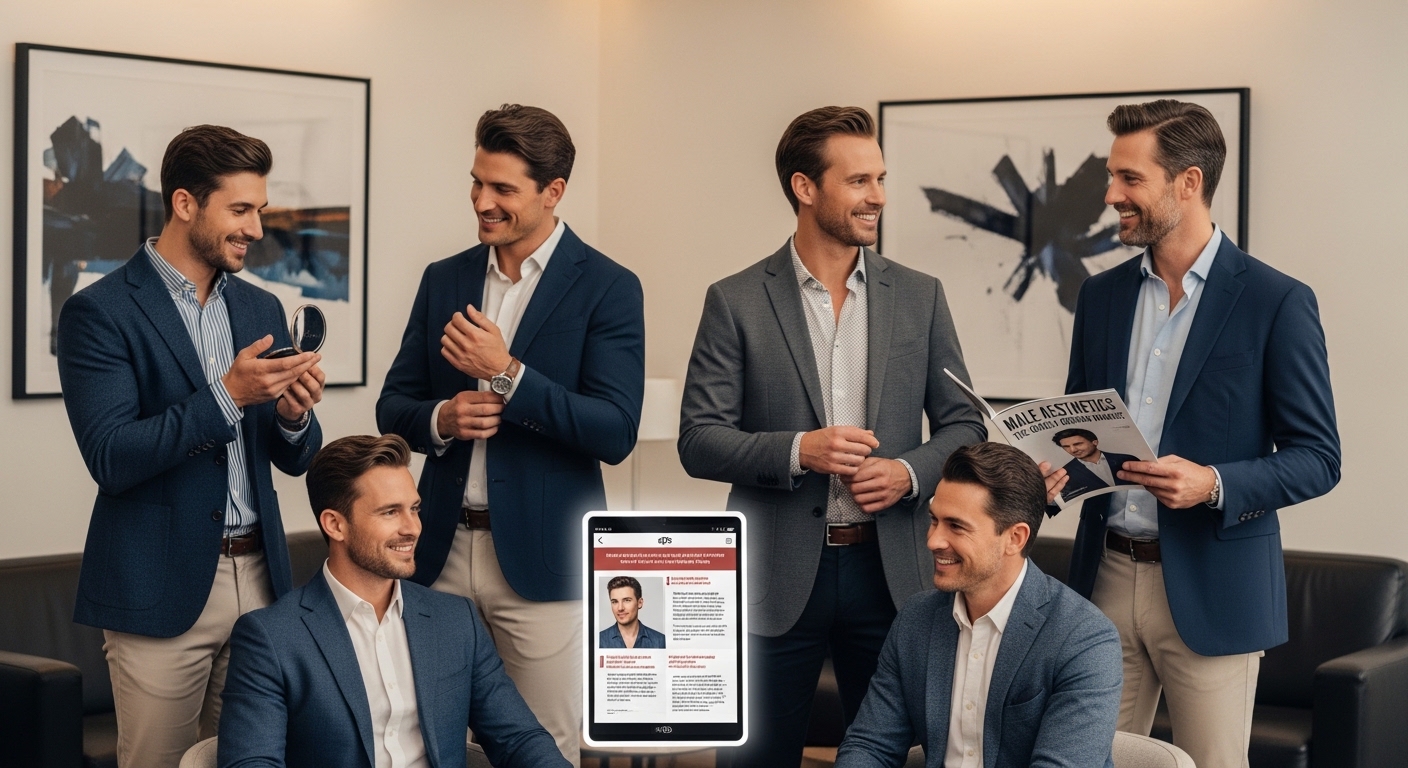
For many years, aesthetic surgery was largely associated with women. However, in recent years, we have observed a remarkable shift in our clinics. The number of male patients has been steadily increasing. This growth is not loud or flamboyant; it is calm, conscious, and determined. Male aesthetics is no longer a passing trend, but a clear sign of a lasting transformation.
Today’s man does not only want to be successful; he also wants to look energetic, dynamic, and well-groomed. In the digital age, everyone is more visible. Zoom meetings, social media platforms, and high-resolution cameras allow individuals to evaluate themselves more objectively. Men now look in the mirror more carefully and recognize signs of fatigue, age-related changes, and proportional concerns more clearly.
At the forefront of this transformation, Bulent Cihantimur emphasizes that male aesthetics requires a completely different artistic and anatomical perspective. According to his philosophy, subtle refinement, structural balance, and identity preservation are the foundations of successful outcomes in men.
However, the dynamics of male aesthetics differ significantly from those of female aesthetics. Men generally seek a stronger and more refreshed appearance rather than dramatic changes. They do not want to be “noticed” for having had a procedure; they simply want to look good. I have always advocated one principle: The best aesthetic is the one that goes unnoticed. In male aesthetics, this philosophy is even more critical. Preserving masculine identity, maintaining facial character, and protecting natural expression are essential.
Among the most frequently requested procedures are eyelid surgery, rhinoplasty, gynecomastia surgery, jawline enhancement, neck tightening, and hair transplantation. Male patients typically aim to correct a tired look, achieve a more defined jawline, or address localized concerns that cannot be resolved through exercise alone. The key is to preserve the strong contours, structural transitions, and natural facial expressions of the male face. Overfilling or exaggerated applications that feminize the face represent the most common and significant mistakes.
One reason this market is described as “quiet” lies in the way men make decisions. Most male patients conduct thorough research, review references, examine results carefully, and once they decide, they move forward with clarity. The process is more strategic. Men often view aesthetic procedures not as a beauty investment, but as a performance investment. Looking younger, appearing dynamic in professional life, and feeling confident are their primary motivations.
Globally, male aesthetics has gained significant momentum. In the United States and across Europe, minimally invasive procedures are rapidly becoming more common among men. Self-care is no longer perceived as a weakness, but as a sign of awareness. In Turkey, we observe a similar pattern. Especially in major cities, men are approaching aesthetic procedures with greater openness and rationality.
The goal of male aesthetics is not to change the face. It is to reveal a more energetic version of the individual while preserving his character, masculine identity, and natural expression. One of the most common statements I hear from my male patients is: “I don’t want anyone to know I had something done, but I want everyone to say I look good.” True mastery lies in achieving that balance.
Looking ahead, it is clear that male aesthetics will continue to grow. Men between the ages of 30 and 55, particularly professionals, will remain the core demographic of this market. Techniques offering faster recovery, natural outcomes, and personalized planning will take the lead. Aesthetics is no longer a gender-based field; it is becoming a personal choice shaped by how individuals want to feel about themselves.
True aesthetics does not shout. Its power is quiet. And male aesthetics is the rising field of that quiet strength.
Doctor B
Bulent Cihantimur