









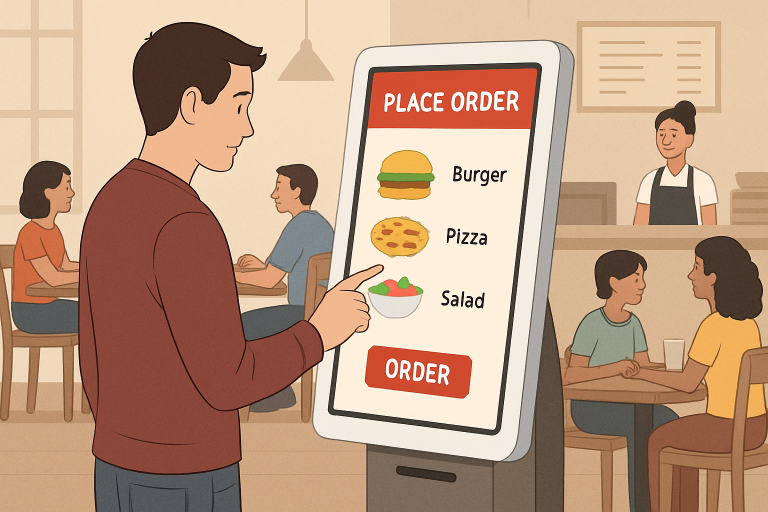
Restaurants around the world are reimagining the guest experience using digital kiosks, making dining out more convenient, interactive, and personalized than ever before. These touch-screen kiosks are fast becoming the heart of the modern restaurant self-ordering system, allowing customers to browse menus, tailor orders to their preferences, and pay with ease. Whether for a quick-service burger joint or a large fast-casual chain, kiosks streamline routine interactions, eliminate long lines, and give patrons more control over their meals.
The adoption of self-service kiosks not only benefits customers but also helps restaurants overcome operational hurdles and adapt to new industry challenges. As digital self-ordering becomes mainstream, eateries see significant improvements in order accuracy, service speed, and even sales growth. In turn, establishments can dedicate more resources to enhancing food quality and hospitality, redefining how people experience dining out. The shift towards digital interfaces is not simply an upgrade in service; it is a fundamental transformation in how restaurants operate at every level.
Enhancing Customer Experience
One of the most significant benefits of digital kiosks is their ability to enhance the customer journey. Diners can take their time exploring the menu and customizing orders through an intuitive, visually appealing interface. This freedom reduces the pressure of ordering at the counter, leading to better decision-making and greater overall satisfaction. With fewer lines and a more autonomous process, guests can place orders at their own pace, which can be particularly beneficial for those with dietary preferences or allergies.
Moreover, digital ordering tends to be less prone to human error. Kiosks prompt users to verify selections, eliminating the misunderstandings that can occur during face-to-face transactions. According to a recent report by Shake Shack, their kiosks became the most popular in-store ordering channel, attracting larger orders and freeing up staff to focus on food prep and customer service. This example shows how innovative technology can merge speed, accuracy, and personalization into a seamless guest experience.d
Boosting Operational Efficiency
From a business perspective, self-ordering kiosks are revolutionizing operational efficiency. Digital automation allows restaurants to shift front-line employees from taking orders to more value-added activities, such as food delivery or guest relations. During peak dining hours, these systems expedite ordering, enabling restaurants to serve more guests without sacrificing quality or service speed. Industry research shows that kiosks can reduce in-store wait times by as much as 30 percent, boosting throughput and enhancing public perception of a brand’s reliability and innovation.
Driving Sales and Revenue
Self-service kiosks offer restaurants unique opportunities to drive incremental sales. Upselling and cross-selling techniques can be built directly into the digital interface, offering relevant add-ons and combos based on a guest’s order selections. McDonald’s reported an average increase of 5 to 6 percent in check size after introducing kiosks, largely due to these intelligent prompts. Unlike human cashiers, kiosks never forget to suggest a dessert or a premium upgrade, ensuring customers are continually exposed to enticing menu options and special promotions.
Embracing Technology Integration
Modern restaurant kiosks are rarely standalone systems. They often integrate seamlessly with mobile apps, loyalty programs, and restaurant management platforms. This creates an uninterrupted guest journey—customers can start an order on a smartphone, finish at the kiosk, and pay using their preferred digital wallet. The ability to track customer preferences across channels fuels greater personalization and helps restaurants design targeted offers, ultimately building long-term loyalty. For an in-depth look at how technology is bridging gaps in the hospitality sector, readers can refer to this Forbes article.
Addressing Labor Challenges
With persistent labor shortages and rising wages impacting much of the food service industry, digital kiosks have become a practical solution. By automating the ordering process, restaurants can operate more efficiently with fewer front-of-house staff without compromising customer service quality. This shift enables team members to focus on more skilled responsibilities, such as food preparation, event organization, or enhancing in-person hospitality. Adapting to this change helps businesses manage costs and remain competitive in a challenging labor environment.
Ensuring Data Security and Privacy
As digital kiosks gather and process sensitive information, ensuring the security of customer data is a top priority. Industry-leading restaurants comply with regional and international data protection standards such as GDPR and CCPA. They deploy robust encryption and access control protocols to safeguard patrons’ payment details and personal information. Proper data management not only protects brand integrity but also builds consumer trust and confidence in the technology.
Future Trends in Self-Service Dining
The next chapter for self-service dining will be shaped by advancements in artificial intelligence, voice recognition, and omnichannel innovation. Future kiosks may offer AI-powered recommendations based on order history, voice and gesture-based interfaces for greater accessibility, and expanded integration with delivery and curbside offerings. These enhancements will allow restaurants to continuously refine the guest experience and keep pace with the evolving expectations of tech-savvy consumers.
Conclusion
Digital kiosks are not just a convenience: they are transforming the way restaurants serve, engage, and build loyalty with their clients. From driving operational improvements to unlocking new revenue streams, these self-service solutions are helping eateries future-proof their businesses while elevating the guest experience. As technology continues to advance, digital kiosks will remain at the forefront of hospitality innovation, reshaping what it means to dine out.