





From garage cleanouts in Morris County to renovation debris in Sussex and Passaic counties, scrap metal is easier to recycle when it is organized before it reaches the yard. For local homeowners, contractors, and industrial customers, commercial metal recycling Morris County, NJ information from Raimo Scrap Iron And Metal can be useful when planning a load. The company’s website describes scrap metal recycling services for residential, commercial, and industrial material, with a North Jersey service area that includes communities near Byram Township, Sussex County, Morris County, and Passaic County.
Preparation does not need to mean taking everything apart. It means identifying the material, separating obvious hazards, securing the load, and communicating clearly with the receiving facility. That approach helps keep reusable metal out of general waste while reducing delays, surprises, and safety concerns.
Why Scrap Preparation Matters
A mixed pile of metal, wood, plastic, trash, and equipment is harder to inspect than a simple, separated load. Clean staging also makes it easier to spot sharp pieces, leaking parts, batteries, or items that require special handling. Before delivery, verify what the facility accepts because material requirements and service availability can change.
How to Identify Common Scrap Metals
Start with the broad distinction between ferrous and nonferrous metal. Ferrous material contains iron and commonly includes steel beams, shelving, cast iron tools, machinery parts, vehicle frames, and appliances. Nonferrous material includes copper pipe, electrical wire, aluminum siding and window frames, brass valves and fixtures, and stainless steel items.
A small magnet is a helpful first sorting tool. Steel and iron usually attract a magnet, while aluminum, copper, brass, and many stainless items do not. This is only a basic test, however. Coatings, attachments, and metal blends can affect how an item is graded.
How to Sort a Scrap Metal Load
- Lay out material in a dry, well-lit area.
- Remove loose garbage, cardboard, wood, and large plastic pieces.
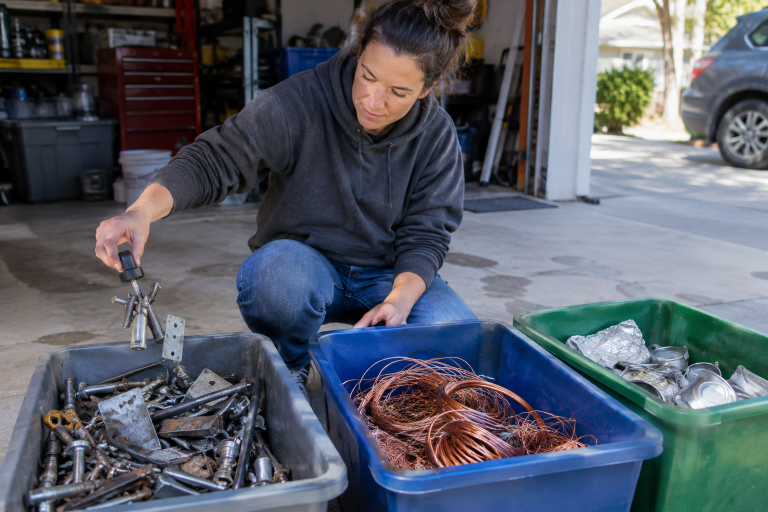
- Separate magnetic steel and iron from nonmagnetic metals.
- Group copper, brass, aluminum, stainless steel, and insulated wire separately when reasonable.
- Keep appliances, batteries, tanks, and oily equipment apart from ordinary loose scrap.
- Take photos and estimate dimensions before arranging service for oversized material.
What to Remove Before Recycling
Basic cleanup is worthwhile, but safety comes first. Remove packaging and loose debris when it can be done safely. Do not burn wire to remove insulation, and do not cut into sealed tanks, cylinders, compressors, or unknown containers. Keep oil-covered components isolated, and ask the receiving facility how much dismantling is actually useful before spending time on the job.
Appliances and Refrigerants
Refrigerators, freezers, dehumidifiers, window air conditioners, and similar equipment should be kept separate from ordinary scrap. They may contain refrigerant, compressor oil, or other components requiring controlled handling. The EPA’s appliance disposal guidance explains why refrigerant recovery and the removal of hazardous components are important before final disposal or processing.
Do not puncture refrigerant lines or casually remove a compressor. Keep appliances upright when possible, ask whether doors should be removed for safe storage, and confirm the facility’s current acceptance process before transport.
Batteries, Fluids, and Other Hazards
Batteries do not belong in a mixed metal pile. Lithium-ion batteries can create a fire hazard when damaged, crushed, or allowed to contact other metal items. Separate rechargeable batteries, automotive batteries, fuel tanks, propane cylinders, oxygen cylinders, and equipment with visible leaks. Report questionable items before delivery rather than placing them in a container without notice.
Safe Scrap Metal Transport
Use sturdy bins, pallets, or containers for smaller pieces. Cover sharp edges, coil and secure loose wire, and use properly rated straps or chains for heavy material. Balance the load, stay within the vehicle’s weight limits, and recheck tie-downs before leaving. If an item is too heavy to load safely, ask whether pickup, a roll-off container, forklift support, or other equipment is available.
Tips for Businesses and Contractors
Construction crews, fabricators, property managers, and maintenance departments can reduce clutter by placing labeled collection bins near recurring work areas. Separate steel, copper, aluminum, brass, and wire at the source instead of after they become mixed with demolition debris. Track typical material volumes and describe site access, loading conditions, and scheduling needs when requesting containers or transportation.
Choosing a New Jersey Recycling Option
North Jersey residents and businesses can compare municipal programs, scrap yards, specialty handlers, and pickup providers based on the material involved. The New Jersey recycling markets directory can help identify recycling centers and potential material markets across the state. Call ahead with a clear description of the load, especially when it includes appliances, batteries, machinery, wire, or fluids.
Common Scrap Recycling Mistakes
- Assuming every facility accepts every metal item.
- Mixing batteries, refrigerant appliances, or oily parts into clean scrap.
- Relying on outdated hours, pricing, or pickup information.
- Overloading a pickup truck or trailer.
- Leaving sharp or loose scrap where children, pets, or visitors can reach it.
Frequently Asked Questions
Should scrap metal be cleaned before recycling?
Remove loose trash and obvious nonmetal material when it is safe to do so. Avoid unsafe stripping, cutting, draining, or dismantling methods.
Is it worth separating copper, brass, and aluminum?
Yes. Separation makes the material easier to identify and helps prevent nonferrous metal from being mixed into general scrap.
Can refrigerators and air conditioners go into a scrap pile?
Keep them separate and contact the receiving facility first because they may require refrigerant recovery or other preparation.
What should a business provide when arranging a large load?
Describe the material type, estimated volume, access conditions, loading needs, and whether the load includes any batteries, fluids, appliances, or unusual equipment.
Conclusion
Good scrap preparation starts with a simple sort and ends with safe transport. By separating metals, identifying hazards, and confirming current requirements before leaving Morris County or nearby North Jersey communities, homeowners and businesses can make recycling more efficient and safer for everyone involved.